
Founded in 2019 by Shareef El-Sissi, who brings two decades of cannabis industry experience, Terpene Belt Farms is an Oakland, California-based producer of hemp and cannabis essential oils and terpenes. Last year, the company merged with its genetics supplier, Nexus Agriscience, giving it end-to-end control from plant breeding through processing, and a stronger platform for developing chemically consistent, plant-derived ingredients for wellness, flavor, fragrance, and, eventually, pharmaceutical markets.
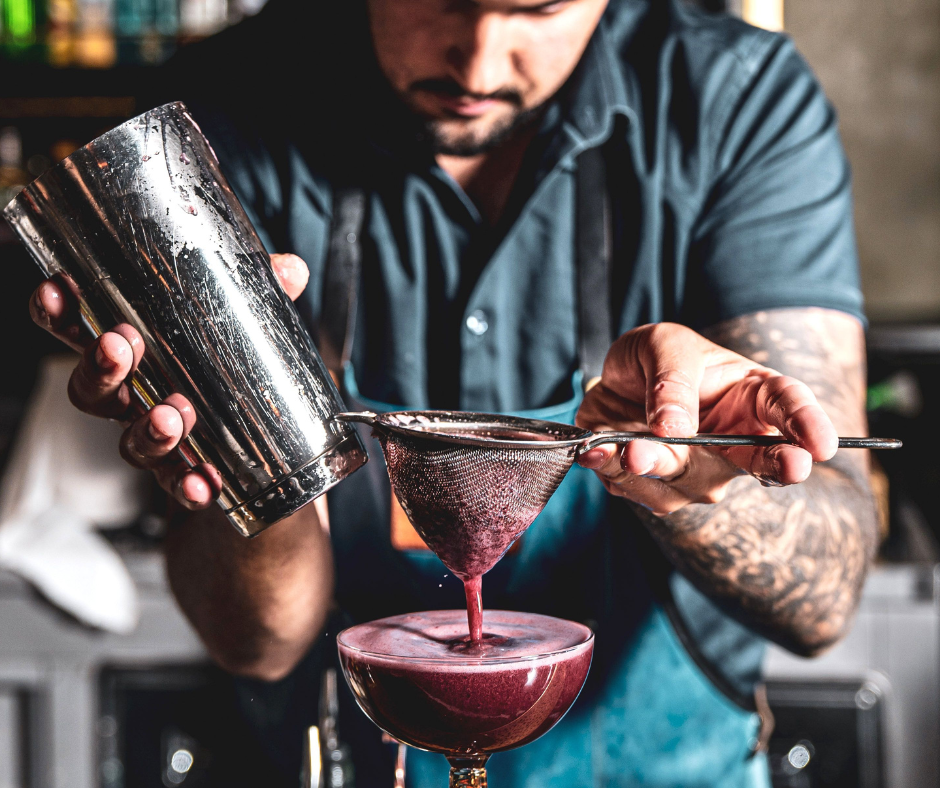
Over time, the company expanded beyond the cannabis vape market where it got its start. As infused beverages began to emerge, Terpene Belt Farms tested terpene-forward craft cocktails at its annual harvest party and found that terpenes alone produced measurable mood effects without any cannabinoids.
The GRAS Path
El-Sissi saw that the path to the mainstream market for terpene-based ingredients was to chart a regulatory course. The company is currently awaiting verification of its GRAS (Generally Recognized as Safe) status with the FDA, a process that requires a formal safety and toxicology review and, if successful, results in a GRN number that makes the ingredient legally usable in food and beverage applications. El-Sissi also sees the regulatory path as a way to legitimize the industry in the eyes of lawmakers and medical professionals and to establish cannabis as a credible ingredient in the mainstream food and wellness supply chain.
Hemp-derived ingredients like hulled hemp seeds and hemp seed oil have already been approved for sale as food, each with defined cannabinoid concentrations that allow them to be effectively regulated. El-Sissi sees this as a playbook for getting terpenes to the same place.
Beyond FDA approval, he is eyeing secondary approvals with the TTB, the federal body that governs ingredients used in alcoholic beverages. “We wanted to create an ingredient which could be used in low concentrations as flavoring, and as you increase the concentration, we want to begin to build a set of claims, dietary function claims, and provide appropriate substantiation and register the ingredient under the FD&C Act, which is a secondary set of rules that governs what sits in between food and pharmaceutical, which are functional,” says El-Sissi.
The Contingency Ingredient
The regulatory uncertainty around THC in beverages, and the November 12th deadline that could determine allowable cannabinoid thresholds in edibles and drinks, has created an opening for terpenes as a contingency ingredient. El-Sissi argues that many THC beverage brands stripped their products of the entourage effect in an effort to mask any trace of cannabis flavor.
At the upcoming Hemp Beverage Expo, the company plans to present formulation options designed for a market that may soon be operating under a 0.4 milligram per can THC cap, a threshold that would represent a significant reduction from the doses many consumers have come to expect. By pairing terpenes with low-dose THC through the entourage effect, El-Sissi argues brands can preserve the experiential profile their customers are used to without relying on higher cannabinoid concentrations. Alternatively, terpenes can serve as a standalone ingredient in a wellness beverage to help create homeostasis.
Terpenes, El-Sissi suggests, offer a compliant, documented, and increasingly substantiated path forward. Observational studies using EEG brainwave monitoring are currently underway, and the anecdotal case is building that terpenes reliably shift mood states even without cannabinoids.
What sets Terpene Belt Farms apart is that its oils are not blended formulations. Through conventional plant breeding, the company develops specific strains engineered to produce a complex oil with a defined terpene profile targeting a particular mood state. The oil goes through the GRAS process as it is extracted from the plant, unchanged. The longer-term goal is to apply the same rigor to other functional ingredients gaining traction in the beverage market, bringing the safety documentation, toxicology work, and supply consistency that categories like kava, mushrooms, and other botanical derivatives currently lack.
The Bigger Picture
“I think over time, we’re going to see a better understanding and adoption of natural ingredients that have a function associated with them. And I think that everybody believes that, at the core, natural, whole foods are actually better for you. So, we want to be a champion of that movement,” said El-Sissi. He also pointed to the steady consumer shift away from heavily processed foods loaded with preservatives and sugars, and how replacing them with plant-based ingredients will have a positive impact on the broader population.
TRIP, a beverage brand with magnesium as its hero ingredient, along with L-theanine, ashwagandha, and Lion’s mane, recently secured a $40 million funding round, reflecting growing investor appetite and consumer demand for the functional ingredient category.
El-Sissi sees the hemp plant as a platform for replacing petroleum-based chemicals with naturally derived compounds across food, flavor, fragrance, and materials. On the beverage side, he is bullish that cannabis and hemp will continue pulling consumers away from alcohol globally, with regulatory proliferation accelerating that transition. “I believe this is just the start,” he says. “The cannabis or hemp plant could lead a revolution in materials and synthetics, in building materials, in food, flavor, and fragrance. We’re doing our part.”