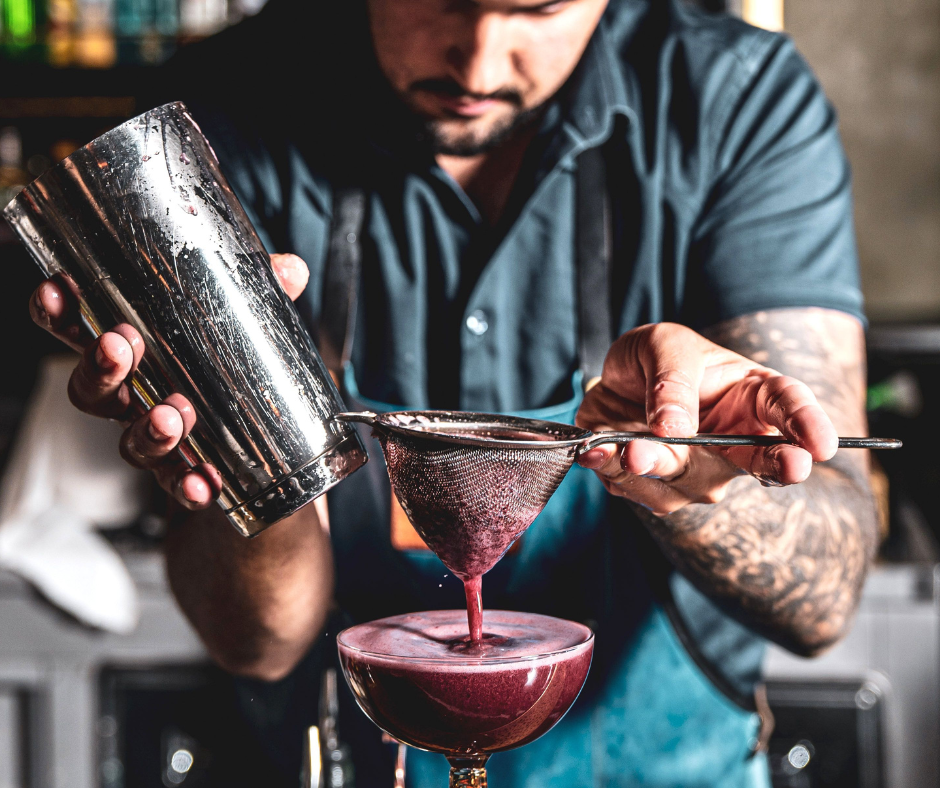

Behind every successful THC beverage is an infusion system that determines whether cannabinoids stay stable, dose consistently, survive distribution, and deliver a predictable experience.
An emulsion formulation is a key ingredient in any cannabis beverage, whether hemp or marijuana-derived. Without it, cannabinoids will not disperse evenly throughout the beverage, leading to inconsistent dosing, poor stability, and unreliable consumer experiences.
Azuca is a cannabis emulsion formulation company that has been serving the regulated cannabis industry for about eight years. Kim Sanchez Rael, CEO and Co-Founder, said they have infused every form factor you could ingest. “Our tagline is, every cannabinoid, every category, every market, no constraints.”
Azuca applies biotechnology and plant-based food science to control how ingestible cannabinoids are delivered, absorbed, and experienced. The goal is reliable dosing, predictable onset, and consistent bioavailability at commercial scale. Getting the emulsion formulation right is only part of the equation. It also needs to work within existing manufacturing systems and remain repeatable at commercial scale.
Emulsions are part of the beverage recipe and do not contain THC, making them legal to ship to any manufacturing facility worldwide. Brands then add their THC concentrates and a beverage base to complete the beverage. Azuca also offers hemp-infused emulsions that are legal to ship as a ready-to-use solution. “The technology is the same,” says Rael. “It’s really about what is the best fit for a particular manufacturing partner, given their manufacturing interests, their constraints, and their regulatory framework.”
Not All Emulsions Are the Same
Azuca has specific emulsion recipes tailored to the consumption form factor: beverages, gummies, chocolate, and whole-plant vs. distillate. Rael is quick to point out that beverage formulations are more complex than most people assume, including operators working in the category.
The complexity is caused by several variables: the emulsification or encapsulation process used to infuse the cannabinoid, the beverage base itself, the container, heat cycles during distribution, and the expected shelf life. All of these factors interact to determine the quality and stability of the final product.
First Generation: Oil-Based Infusions
The original infusion methods for ingestibles were largely oil-based. They were slow-onset, inconsistent in dosing, and prone to stability problems.
There was visible separation in the final product, with the emulsion floating on the surface, creaming, and clinging to the container’s inner walls. Taste was often poor.
Second Generation: Nano-Emulsions
Nano-emulsions improved onset speed and, in some cases, stability, but introduced new problems. They rely on synthetic surfactants that create off-flavors, which manufacturers then have to mask with bitter blockers, setting off a cycle of ingredient layering just to manage taste. Some surfactants also cause side effects in sensitive individuals, including headaches. Rael says she is one of them.
Beyond taste, nano-emulsification presents real operational challenges. The required equipment tends to be large, expensive, and inflexible, with high minimum order quantities and limited modularity. That limits the kind of scalable, adaptable manufacturing that brand partners need.
The Next Generation: Moving Beyond Particle Size
Earlier emulsification methods used particle size as the primary driver of stability. It is a factor, but it is not the only one. The latest generation of infusion platforms focuses on stability, predictability, taste, scalability, and manufacturability together. This allows brands to develop and produce cannabinoid beverages without synthetic surfactants and without bitter blockers.
Why Your Infusion Partner Matters
Choosing the wrong emulsion provider doesn’t just affect product quality. It can sink a brand.
Azuca conducted a study of roughly 30 hemp-infused beverages purchased at retail, testing each one four times in its lab. 70% of those products were off by 30% or more from the cannabinoid potency listed on the label. Some contained double the stated dose. Others came in well below, and a handful tested at zero milligrams of active cannabinoid, despite label claims.
“If you don’t get the infusion right, and it’s compatible with your base and your packaging, you’re going to be delivering an unpredictable experience to your consumers,” Rael said. “The consequence is that those consumers aren’t going to have repeatable, predictable, good experiences, so they’re not going to come back and repurchase your brand.”
If you want to launch in a new market or A/B test two different beverage bases, you need an infusion partner who can help you evaluate compatibility before you go to market. Azuca offers this service as a complimentary offering, bringing a brand’s uninfused base to its lab for shelf-stability testing. The process can predict how a beverage will perform after one month, two months, and six months on shelf before a brand commits to production.
They also offer small-batch canning runs for brands that want to get product into hands before making a large inventory commitment. Using an in-house canning line, brands can produce around 400 cans, enough to validate the formula, get samples to distributors, and test the market without ending up with 600 cases aging in a warehouse.
Rael also flags safety history as a concern that often gets overlooked in conversations about formulations. Not all are the same: some are true emulsions, some are straight encapsulation systems, and others are hybrid solutions like the one Azuca uses. The terminology around infusions gets lumped together, but the chemistry is different, she warns.
She has seen some products on the market that use novel molecular combinations with no established safety record in the human body. They may look good and even taste fine, but that is not the same as being well-understood. “A brand needs to know: what is the history of this process that you’re using that I’m going to go put into my customers’ bodies?” Rael said brands must ask formulators, “What’s the safety history of your chemistry?”
The Future of Beverage Formulation: Minor Cannabinoids
Minor cannabinoids offer brands and formulators significant flexibility to differentiate their products and will be included in the next iteration of hemp beverages.
From an infusion standpoint, minor cannabinoids do not all behave the same way, and each one has to be validated individually against the infusion technology being used. If you want to incorporate CBN into a beverage, for example, your infusion partner needs to be able to show you how they have specifically validated that cannabinoid with their process for safety, shelf stability, and overall performance in the final product.
Azuca has validated their beverage formulations across what Rael calls the major minors, the ones generating the most market interest: CBN, CBG, and THCV. For brands evaluating an infusion partner, the standard should be the same regardless of who they work with. Ask for the data.
Terpenes: The Next Frontier
As the hemp beverage sector matures, terpenes will emerge as another dimension of formulation, and potentially a category all their own.
Effects-based terpene blends have been validated for their functional properties and can be layered with cannabinoids or used on their own.
Given ongoing regulatory uncertainty in the hemp space, some brands are developing terpene-only versions of their products as a contingency, a way to keep a brand alive and on shelves if cannabinoid restrictions tighten. Rael calls it a life raft, and she thinks it is a smart move. A terpene-only line extension protects brand equity while the regulatory landscape sorts itself out over the next few years. Rael believes this is a category to watch.
The bottom line: you can’t take any old emulsion, any old base, and any old container and expect to produce a hemp beverage worth drinking twice.